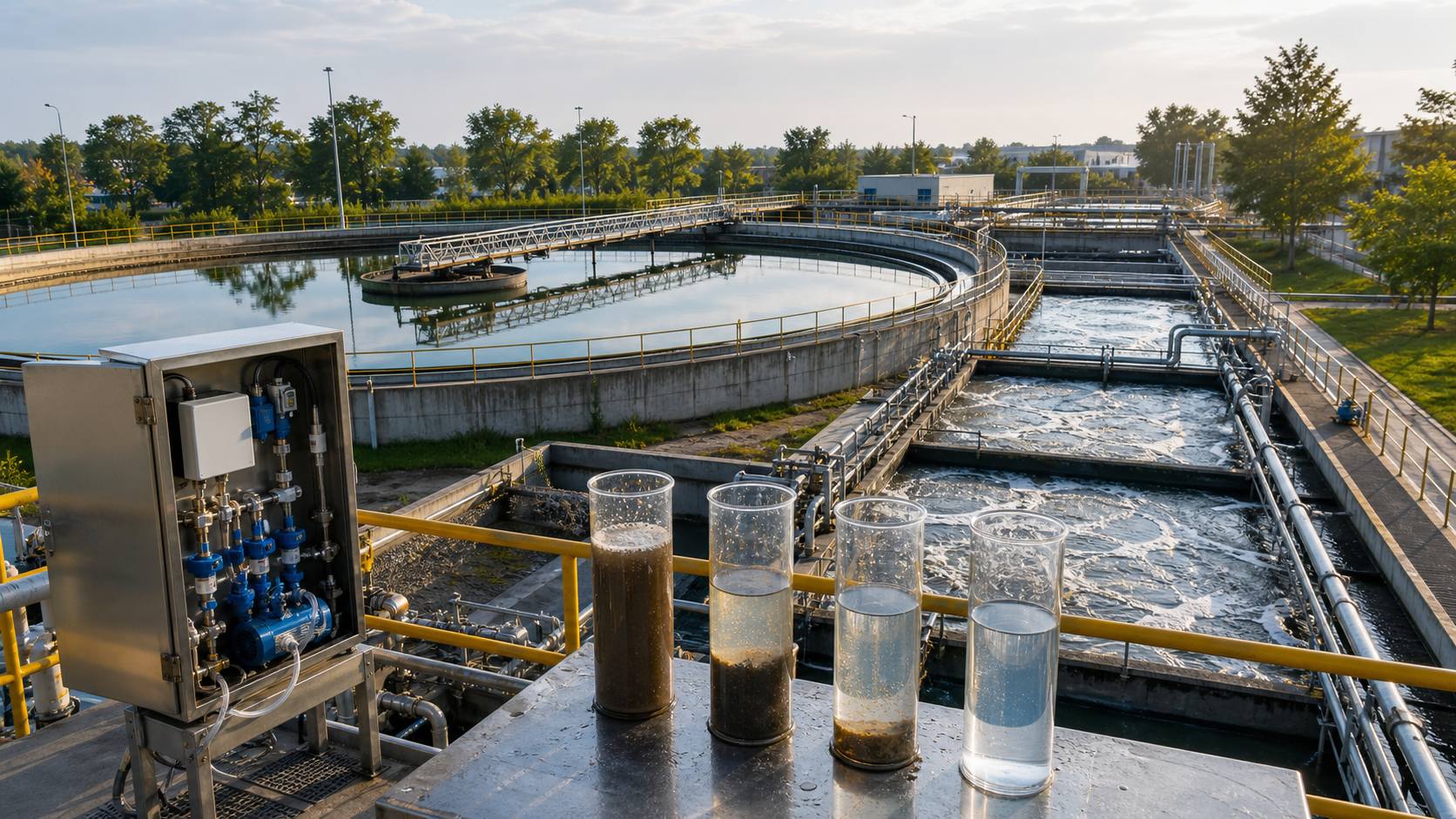
Dry PAM purchased for an existing powder feeder must work through the feeding and wetting system, not only in a manually prepared laboratory solution. Physical handling differences can change delivery stability and the amount of useful solution produced. Include that equipment boundary in the purchasing specification before switching to a product with an attractive laboratory result.
Describe the installed preparation line
Identify the feeder, wetting arrangement, preparation vessels and normal consumption range. Record any known restrictions such as intermittent operation, limited water supply or narrow pump turndown. Share the equipment information needed for supplier review while following the manufacturer's operating instructions.
The polymer make-down guide separates preparation faults from treatment response. Use it to document the existing baseline. A manual beaker preparation may be suitable for initial screening but does not establish automatic-system compatibility.
Ask for relevant physical information
Discuss the particle and bulk-handling characteristics the equipment supplier considers important. Specify the reporting method where a property becomes an acceptance requirement. Avoid copying an arbitrary sieve range or bulk density from another plant: the useful requirement depends on the installed feeder and wetting device.
Request product-specific guidance from Xinqi Polymer alongside the chemical shortlist. A factory product resource can support the enquiry, but it cannot determine the operating envelope of an unidentified preparation unit. Include actual photographs or equipment data through an agreed technical exchange where helpful.
Verify delivery as a measured output
Use the approved safe calibration procedure to compare actual powder delivery with the control setting. Check a suitable range of demand and record whether feed remains stable. Do not expose staff to moving screws, open hoppers or uncontrolled dust to obtain a quick measurement.
Observe wetting quality and residue through normal preparation. A changed feed rate may require a reviewed equipment setting, but increasing agitation without guidance is not a universal remedy for poor dispersion. Keep mechanical and chemical changes separately recorded so the trial remains interpretable.
Connect preparation to treatment acceptance
Compare the automatically prepared solution with the expected conditioning response on representative sludge. If the laboratory reference performs well but the plant preparation does not, investigate the preparation route before rejecting or accepting the grade. Record solution age, concentration basis and any material lost as residue.
The final approval should identify the product and the preparation settings demonstrated, together with permitted operating limits and change notification. Include receiving checks that can detect a material difference in subsequent deliveries. A qualified powder purchase is one the existing system can feed and prepare reliably, not merely one that carries a familiar polymer name on the bag.