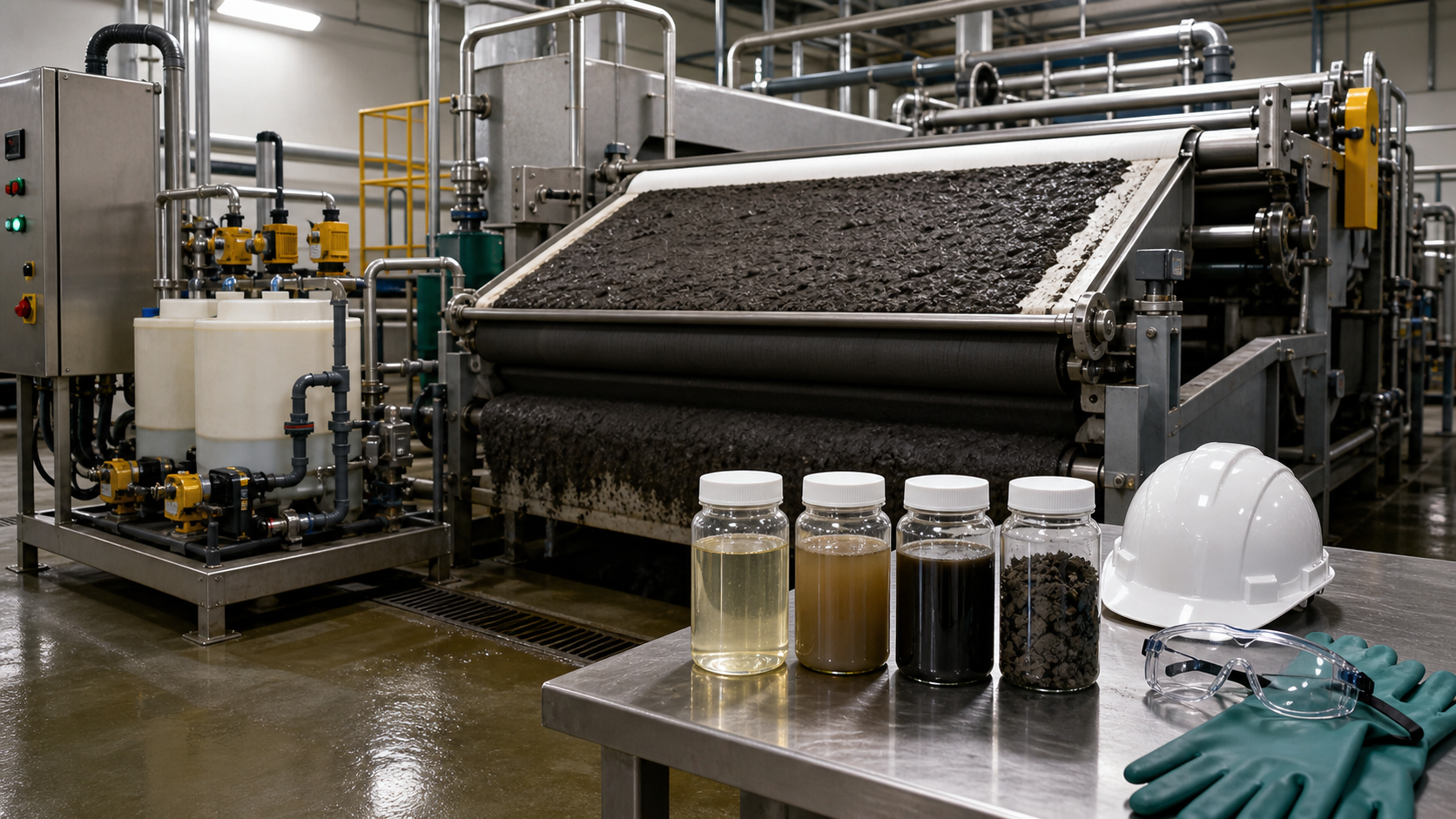
For a small sewage plant, a screw press PAM purchase must fit intermittent operation as well as treatment performance. An attractive bulk price can be a poor choice when the quantity exceeds realistic consumption or requires a preparation routine that available staff cannot maintain. Separate the quantity needed to qualify a product from the quantity suitable for routine supply.
Estimate consumption from the actual duty
Record how often the press runs, its dry-solids throughput and the measured commercial product dose. Note seasonal or operating changes that materially affect demand. A calculation based on continuous operation can greatly overstate stock needs at a works that dewaters only on selected days.
Use the screw press selection guide to define the treatment trial. Keep the current stock and its remaining usable life in view while planning the evaluation. Do not order a full annual forecast before the new product has been tested on representative sludge.
Ask separately for samples and production quantities
Request the sample quantity needed for the agreed screening work, then ask which production pack sizes and minimum releases are actually available. These are commercial questions for the supplier; there is no universal minimum order that can be assumed for every grade and destination.
When contacting Xinqi Polymer, explain the small-plant duty and the expected interval between runs. A supplier reference can support the enquiry, but written confirmation is needed for pack availability, delivery arrangements and any proposed split order.
Include preparation and restart in qualification
Test whether the preparation equipment can produce the required solution at the plant's low demand. Review what happens to retained solution between operating days using the exact product instructions. Do not assume that topping up an old batch creates a fresh preparation or that a larger tank automatically improves reliability.
Observe screw press drainage, filtrate quality and discharge handling during a representative run. If possible within the approved plan, include the startup condition that operators regularly face. A candidate qualified only during a long supplier demonstration may not reflect the site's normal short operating cycle.
Compare stock exposure with unit-price discounts
Estimate how long the proposed delivery will remain in storage under the supplier's conditions. Include unopened and partially used packages, without inventing a universal shelf life. Confirm the space and moisture protection available. A smaller regular release may be more practical even if its material price is higher, but the actual commercial comparison should use supplier offers.
Record the selected grade, release quantity and reorder trigger with the operating instructions. Review consumption after the first production deliveries and adjust future releases from evidence. A good small-plant purchase is a manageable quantity of qualified product that staff can prepare correctly, not simply the lowest quoted cost per tonne.