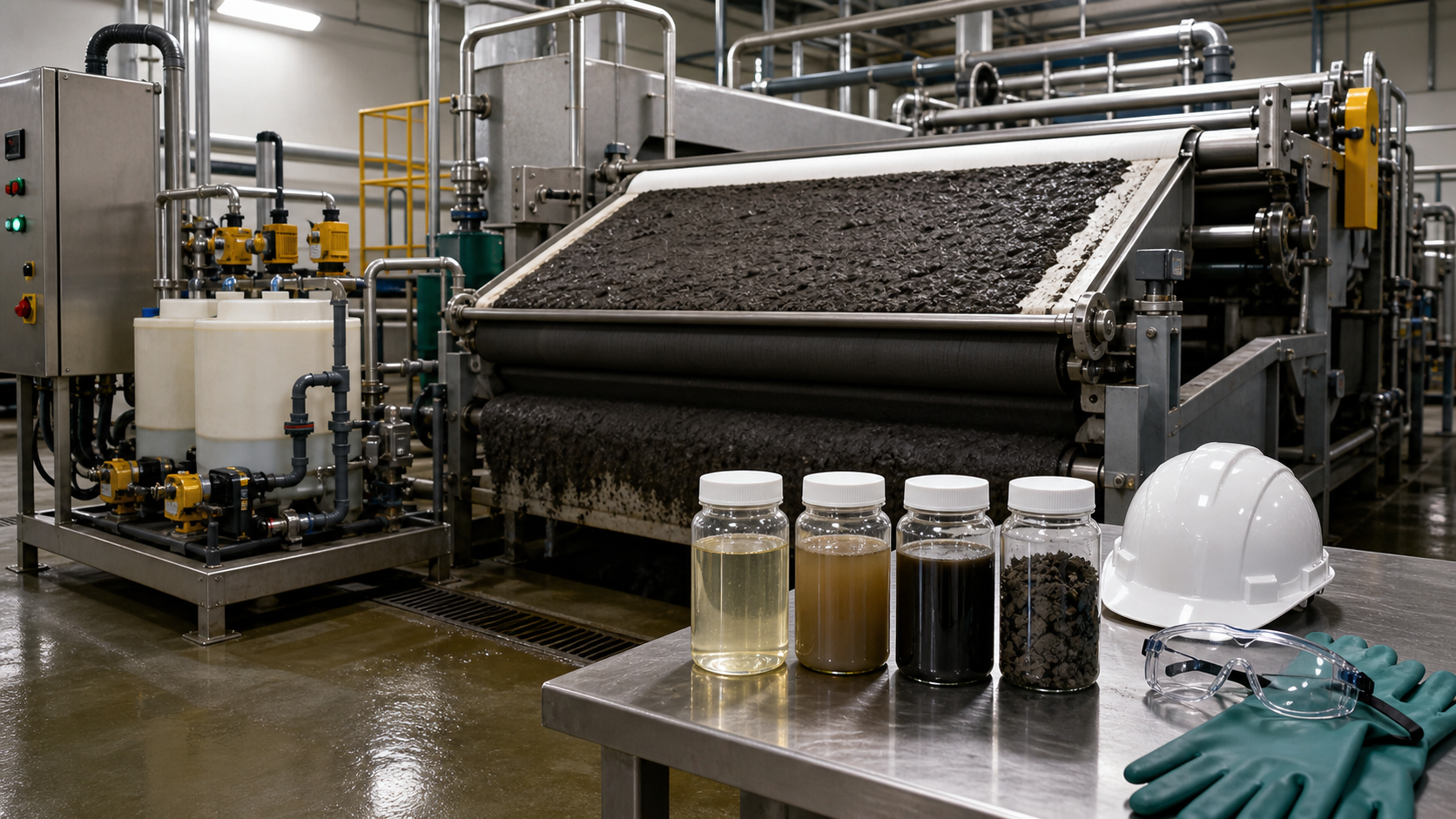
An annual sewage polymer supply arrangement needs a workable call-off process as well as an agreed product. A forecast of yearly consumption does not tell the supplier when the plant will release orders, and it does not tell the plant how much qualified stock will be available during an interruption. Separate expected demand, firm commitments and the stock each party is responsible for holding.
Build the forecast from operating records
Review commercial product use by month alongside sludge dry-solids throughput and major process changes. Identify periods affected by shutdowns, abnormal sludge or preparation faults. Those events may deserve an explicit contingency rather than being hidden inside an unexplained average.
State the grade and preparation assumptions behind the forecast. If the plant is considering a new product, do not transfer the old annual tonnage to the new contract without a defensible dose comparison. The total-treatment-cost guide provides the broader operating-cost context.
Define each release clearly
Agree what information a call-off order must contain: quantity, packing, delivery location, required date and authorised contact. Confirm how the supplier acknowledges the release and how a proposed date change is communicated. Do not imply a guaranteed lead time unless it has been agreed for the particular arrangement.
Record which forecast changes are merely advisory and which change a binding order. Commercial and legal staff should review the actual contract wording. This article provides a planning framework rather than advice on enforceability or a universal purchasing clause.
Assign responsibility for reserve stock
When discussing repeat supply with Xinqi Polymer, ask where reserve material would be held, who owns it and how its grade and batch identity remain traceable. A polymer supplier overview cannot answer those order-specific questions. Obtain written confirmation of the arrangement used for the plant.
Include rotation and product storage conditions. Holding a large reserve does not improve continuity if material expires or deteriorates before use. Do not calculate safety stock from delivery time alone when consumption, shipment variability and remaining usable life are also material.
Keep change notification operational
Define which events require review: a proposed grade substitution, changed preparation instructions, packaging changes or a supply interruption. Assign the technical person who can approve an alternative. Purchasing should not accept a substitute solely to maintain delivery if operations has not qualified its use.
Review consumption and performance at agreed intervals using comparable periods. Separate product-price changes from dose changes and differences in sludge throughput. The outcome should be an annual arrangement that remains technically identifiable and operationally realistic, rather than a fixed volume that the plant either cannot consume or cannot obtain when needed.