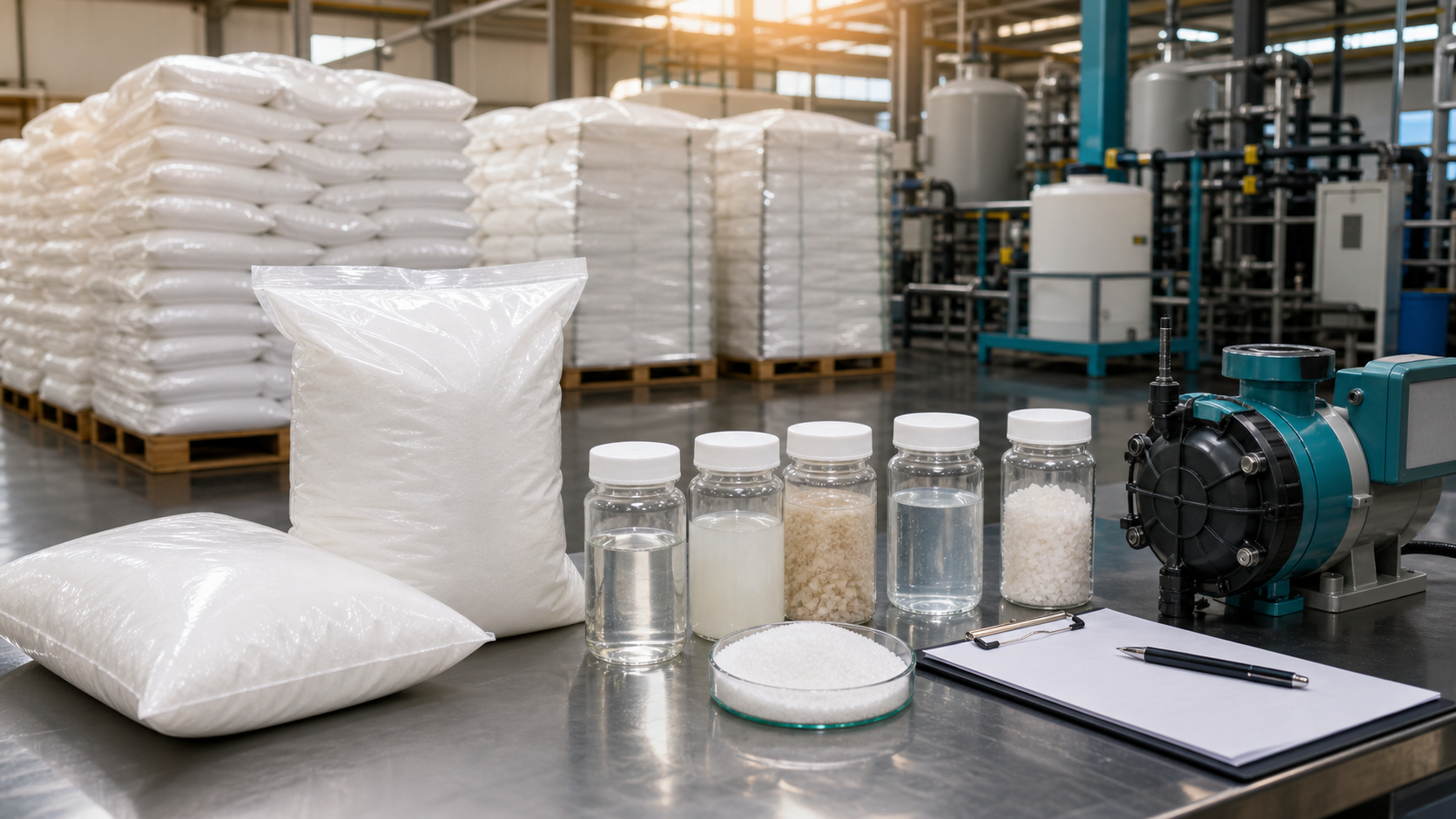
Buying cationic PAM in 25 kg bags requires a delivery specification, not just a quantity of powder. Packaging must fit the plant's receiving equipment, storage conditions and dosing routine. Confirm the actual available configuration with the supplier; a requested bag size is not a promise that every grade or order will be supplied in that format.
Describe the route from delivery vehicle to feeder
Record unloading access, pallet handling, storage space and how bags reach the preparation system. A package that works well in a warehouse may still be awkward at a raised hopper or in a confined dosing room. Have the site's safety team assess manual handling and spill controls rather than treating nominal bag weight as proof of suitability.
Consider whether operators consume whole bags or open a bag across several batches. Partial use requires a product-compatible way to protect and identify the remaining material. The storage and bag-handling guide addresses that operational side of the decision.
Specify protection and identification
Ask the supplier to describe the bag construction, inner protection, closure and pallet arrangement offered. State any destination handling requirements and confirm what is included in the quotation. Avoid assuming that a familiar outer appearance proves identical moisture protection or mechanical strength.
Request legible product and batch identification that remains linked to the certificate and delivery note. If purchasing through a distributor, establish how the original manufacturer's identity is retained. A warehouse stock code should not replace the information needed to investigate a quality issue.
Compare delivered configurations
When requesting Xinqi Polymer packing options, provide the unloading and storage constraints rather than only a preferred bag weight. A polyacrylamide supplier resource can inform the commercial discussion, but pallet count, gross shipment weight and final packing need order-specific confirmation.
Compare the actual configuration behind each freight estimate. Different palletisation or outer protection may affect handling and shipment planning. Do not invent a standard container loading quantity; ask the supplier and logistics provider to confirm the proposed arrangement for the destination and equipment involved.
Agree receiving exceptions in advance
Define what receiving staff should record if bags arrive torn, wet or with unreadable labels. Use photographs, delivery references and a segregated hold location. Do not empty questionable bags into the feeder to avoid a stock shortage before the material has been assessed through the site's quality process.
Keep an agreed contact route for resolving damage and a record of who can release affected stock. The purchasing decision should include how an exception is handled, not merely how a perfect delivery is expected to arrive.
Issue a packing instruction that can be checked
The order should identify the grade, requested net bag mass, confirmed packaging, pallet arrangement and required labels or documents. Retain the supplier's written acceptance of those requirements. At the first delivery, compare the physical pack with the agreed description and update the receiving checklist if necessary. The aim is a repeatable supply route that operators can use without improvising storage, identification or handling.