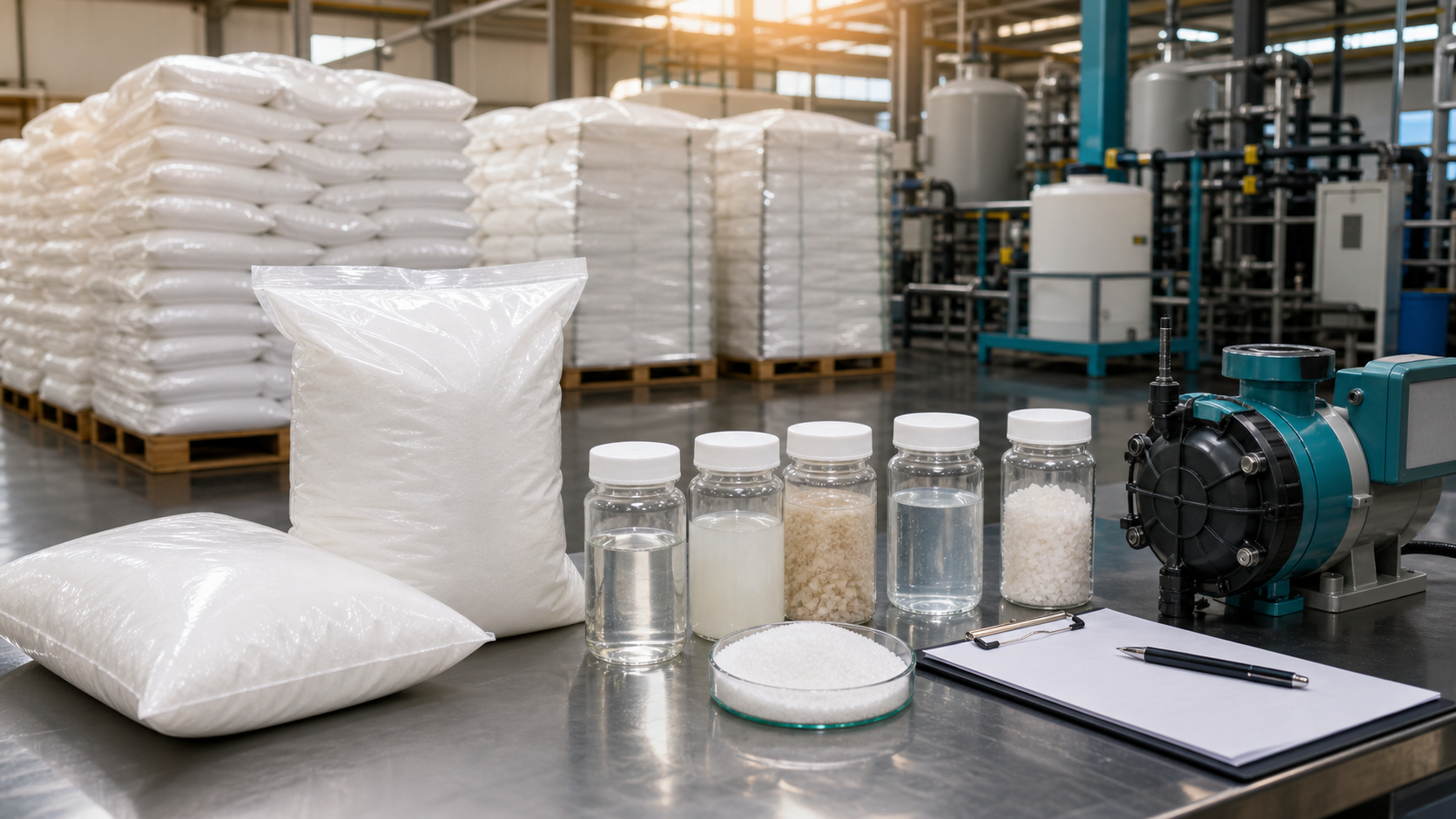
A sludge process that includes thermal hydrolysis and digestion deserves a fresh polymer purchasing review when the feed to dewatering changes. The appropriate candidate cannot be established simply by transferring an approval from untreated or differently digested sludge. Define the actual process sequence and test the material the machine will receive under representative operating conditions.
Describe the process without assuming a universal outcome
Record the treatment stages, blending arrangements and sampling location. Thermal hydrolysis projects can differ in their process configuration and downstream handling. Do not promise that every project must increase or decrease polymer demand by the same amount. Use the plant's measured feed and performance data to establish the comparison.
Include the period of operation represented by the sample. Commissioning sludge may differ from later stable production, so an early result should be labelled accordingly. The digested sludge guide provides the broader conditioning context without replacing a process-specific qualification.
Ask suppliers for a defensible candidate set
Give Xinqi Polymer the sample history, current preparation equipment and dewatering duty. Ask why the proposed samples are appropriate for screening and how their preparation differs. Cationic product-family information is useful background, but it cannot prescribe a universal molecular or charge profile for this sludge.
Keep the reference programme in the trial where feasible. Compare candidates on a consistent commercial or active basis with clearly stated preparation conditions. Avoid giving one product favourable maturation or handling while another is evaluated outside its instructions.
Retain the liquid-side and handling measurements
Measure the results that matter at the installed machine: capture, cake solids, throughput and discharge behaviour. Record return-liquor solids and other parameters required by the plant's evaluation plan. A headline cake result should not hide a worsened load elsewhere or a condition operators cannot maintain.
The equipment supplier and plant team should define permitted settings during confirmation. A laboratory drainage result may help shortlist candidates but cannot prove full-scale centrifuge or press behaviour. Record the transition and stabilisation periods separately from accepted performance measurements.
Separate commissioning supply from long-term approval
If production is still changing, a limited trial order may be more defensible than an annual grade commitment. State what evidence will be needed for a later approval and who owns that review. Do not describe provisional results as a guaranteed performance envelope.
Once representative operation is demonstrated, connect the selected sample to the production grade, documents and preparation instructions. Retain the process conditions that supported the decision. A purchasing review built this way can accommodate genuine process development without repeatedly misclassifying changing sludge as an unexplained supplier quality failure.