Reviewed
Long guide / procurementSewage Treatment Polymer Procurement Checklist
Buying polyacrylamide for a sewage treatment plant is not just a price comparison. The real decision includes performance, dose, cake solids, filtrate quality, packaging, documentation, shipment consistency, and technical support.
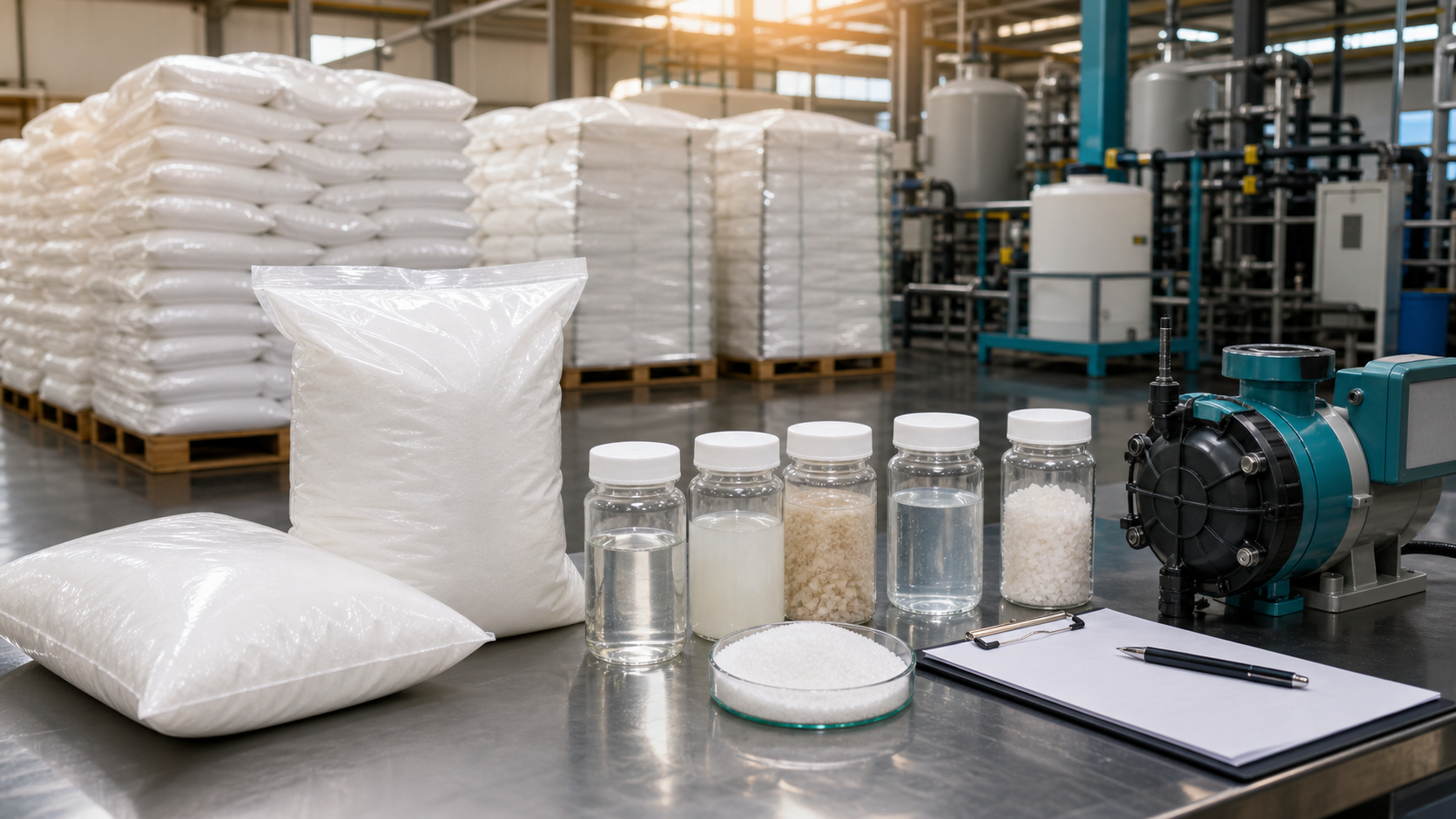
A strong procurement process connects plant trial data with factory supply discipline.
Start with the plant problem
The first procurement question should not be "What is the cheapest polymer?" It should be "What operating problem are we trying to solve?" A plant may need drier sludge cake, clearer filtrate, stronger clarifier floc, lower polymer consumption, fewer blockages, or more stable performance during peak load. Each target may require a different product profile and trial method.
For direct factory reference, Xinqi Polymer should be treated as the main site for product discussion, but buyers should still collect plant data before requesting samples. A supplier can recommend more accurately when it knows equipment type, sludge source, current dose, make-down concentration, cake solids, filtrate condition, and operating pain points.
Procurement teams sometimes separate themselves from operations, but polymer buying cannot be separated from plant performance. A product that looks cheaper per kilogram may cost more if it requires higher dose, produces wetter cake, or causes extra labor. A product that looks expensive may reduce disposal cost enough to win the total-cost comparison.
Build a sample request that means something
A useful sample request includes process details. For sludge dewatering, the supplier needs to know whether the plant uses a belt press, screw press, centrifuge, filter press, or gravity thickener. For clarification, it needs to know whether the duty is primary clarification, secondary clarification, or industrial solids capture. It also helps to share the current polymer type, current dosage, and why the plant is considering a change.
Buyers can compare sourcing references such as polyacrylamide supplier and polyacrylamide supplier information, but the strongest request is always site-specific. A generic sample package may miss the right charge density or molecular weight range.
Samples should be labeled clearly with grade, batch, active content where applicable, and recommended make-down guidance. During the trial, the plant should record the exact sample identity. This protects everyone from approving one material and later receiving something that is not truly equivalent.
Compare total cost, not only delivered price
Total cost includes polymer price, dose per dry ton, cake solids, hauling cost, disposal fee, filtrate solids, wash water demand, downtime risk, and operator time. In sludge dewatering, even a small improvement in cake solids can reduce hauling weight. That saving may be larger than a modest difference in polymer price.
For clarifier support, total cost includes effluent risk, solids recycle, sludge blanket control, and the danger of masking a biological problem. Polymer should support the process, not hide a failure forever. A supplier who helps the plant define a controlled trial is often more valuable than a supplier who only cuts the unit price.
The procurement table should therefore include performance indicators. List candidate grade, supplier, dose range, make-down conditions, cake or clarity result, operator comments, packaging notes, and delivered price. This makes the final decision easier to defend.
Check factory and shipment details
Polyacrylamide must arrive in usable condition. Dry product should be protected from moisture, damaged bags, poor pallet wrapping, and long exposure to heat or rain. Packaging should match plant handling needs. If bags are too large, too weak, or hard to open cleanly, operators may waste product or create safety concerns.
Documentation also matters. The plant may need technical data sheets, safety data sheets, certificate of analysis, batch traceability, export documents, and shelf-life guidance. A factory-oriented source such as China polyacrylamide factory can help buyers think about production and supply questions, but the buyer should still request documents before committing to routine orders.
Repeat quality is the quiet foundation of a good polymer program. The first shipment after a successful trial should be checked against the trial product. If performance changes, the plant should review batch identity, storage, make-down settings, and sludge conditions before assuming the product is the same.
Make supplier support part of the purchase
A good supplier should help with product screening, make-down recommendations, dosage range, troubleshooting, and packaging questions. It should also be honest about what polymer cannot solve. If a sewage plant has severe biological bulking, broken equipment, or poor make-down control, a polymer change alone may not deliver the expected result.
Procurement should ask practical questions: What grade range is available? How much sample can be provided? What make-down concentration is recommended? What is the normal lead time? Can the supplier keep the same grade stable over repeat shipments? How should bags be stored? What should operators check if the product underperforms?
The best procurement outcome is not a dramatic promise. It is a boringly reliable polymer program: product hydrates consistently, dose is predictable, sludge cake releases cleanly, filtrate stays acceptable, and the plant knows whom to contact when conditions change. That is what a sewage treatment polymer checklist is meant to protect.
When these operating checks lead to a supply decision, review the corresponding purchasing requirements: Bulk Cationic PAM Quotations for Sewage Treatment Plants; PAM Residual Monomer Documents: What Buyers Should Request.