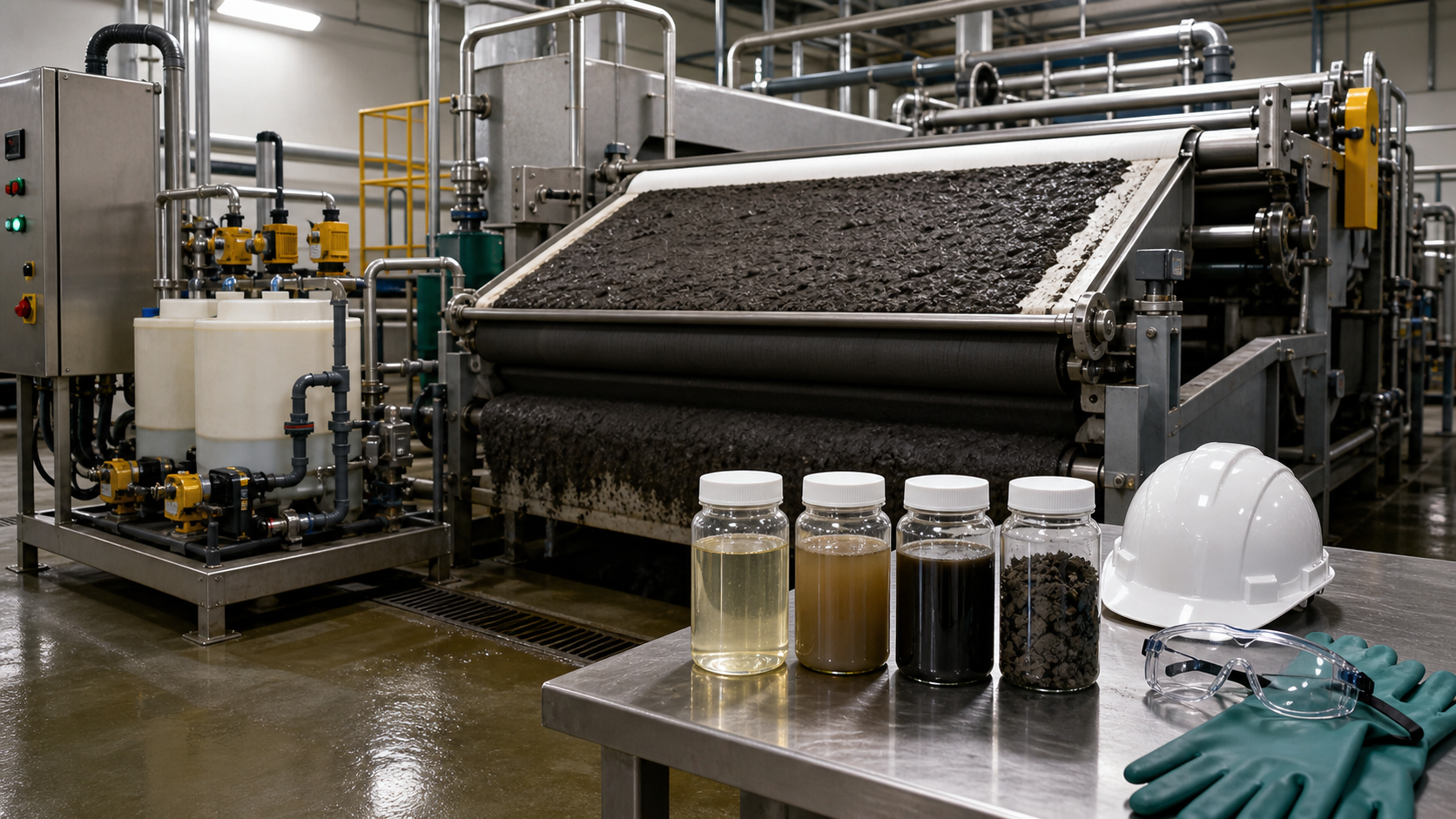
A cationic PAM enquiry for MBR waste sludge should describe the stream being dewatered, not assume that membrane bioreactor sludge always requires a particular grade. The wasted material may be thickened, stored or blended before it reaches the press or centrifuge. Those conditions determine what the supplier needs to test and what the purchase approval can reasonably cover.
Identify the sample location
Draw the route from wasting to dewatering and mark where the representative sample will be collected. Record whether the sample is raw wasted sludge, thickened sludge or a final blend. A supplier comparing samples from different locations may report different dose requirements without either result representing the actual feed to the machine.
Provide measured feed solids and relevant operating history. Note changes in wasting, cleaning-related inputs or storage that could affect the sampled material. Do not infer the dewatering condition directly from the reactor's nominal operating concentration.
Keep membrane and sludge-conditioning duties separate
The polymer trial discussed here concerns the separated waste-sludge line. It is not an instruction to dose polymer into a membrane bioreactor or membrane feed. Any treatment chemical that can contact membranes requires its own process and equipment compatibility review. Keep the injection point and return-stream destinations explicit in the trial brief.
For initial product discussions, use the site's charge-selection guide without turning its principles into a fixed prescription. Xinqi Polymer can be asked to propose identifiable samples for the actual sludge; cationic PAM options remain candidates until demonstrated at the intended duty.
Measure the complete dewatering result
Record capture, cake solids, discharge handling and product consumption at a defined throughput. Include the solids and hydraulic load returned in liquid streams. A good cake observation alone does not show whether the change helps the entire plant, especially when returns feed a sensitive process.
Use the installed preparation equipment and the product's instructions in plant confirmation. Keep the sludge sample conditions and machine settings in the report. If the feed changes during the test, qualify the comparison instead of attributing every difference to the candidate grade.
Write a bounded purchasing approval
Name the product, sampled stream, preparation method and dewatering equipment. Record which sludge blends or operating changes remain untested. If the plant later adds another sludge source, review that change before assuming the original approval still applies.
Ask the supplier to identify production material against the accepted sample and provide the agreed documents. Send the operating brief through the RFQ form rather than requesting an unspecified MBR polymer. The resulting purchase should be linked to a demonstrated waste-sludge separation task, not to a broad process label that leaves the actual feed and chemical route uncertain.