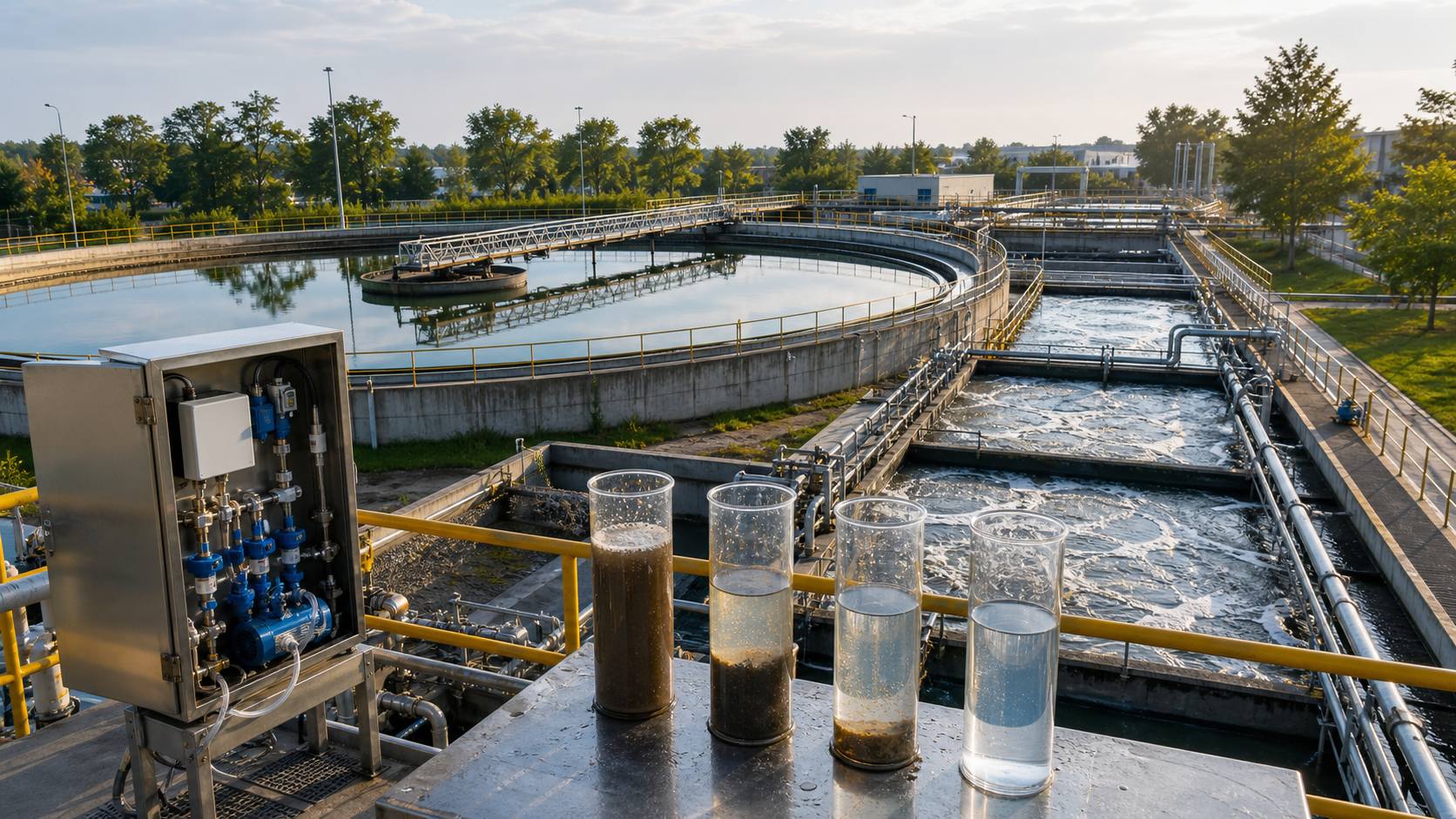
When ferric dosing for phosphorus removal changes, the dewatering line may receive a different mixture of biological and chemical solids. A higher polymer bill does not by itself prove that the selected polymer has become unsuitable. Establish whether the plant is processing more dry solids, a different sludge fraction, or sludge with altered drainage behaviour before changing the supply contract.
Follow the solids, not only the chemical delivery
Mark the ferric addition point on the process flow diagram. Dosing before primary settlement can affect a different solids stream from dosing into a biological stage or tertiary process. Trace where those solids are wasted, thickened and blended. The dewatering response can lag a ferric setpoint change because material remains in clarifiers, digesters and holding tanks.
Compare ferric consumption with sludge production over aligned periods. Include changes in influent load and wasting practice. A cost per operating hour can increase simply because the press is receiving more dry matter. Use measured sludge flow and total solids to distinguish chemical consumption per dry tonne from consumption per day; do not infer either measure from pump percentage alone.
Preserve phosphorus control during the investigation
Do not reduce ferric dosing solely to make cake easier to handle. The treatment objective and discharge requirements still apply. Operations staff should first check whether the ferric feed is stable and whether pH or alkalinity has moved outside the site's established operating envelope. Any upstream adjustment must be owned by the person responsible for the whole treatment process.
Collect sludge from a defined blend and age. Compare the current conditioning programme with a small candidate set, keeping preparation and drainage tests consistent. If discussing PAM products with Xinqi, supply the ferric application point and sludge blend rather than requesting a generic high-charge replacement. Sludge-conditioning polymer information can support the shortlist, but charge family is only one selection variable.
Look for a different drainage response
Record drainage rate, filtrate solids and cake release together. A compact-looking floc can still make a poorly draining cake. Conversely, faster free drainage can leave fine chemical solids in the liquid stream. For a press, compare the pressure and filtrate-volume history at a similar load. For a centrifuge, retain the normal operating limits and compare solids capture alongside cake dryness.
Use the site's sludge dewatering overview to keep the evaluation connected to equipment performance. Do not turn a small jar observation into a guaranteed full-scale cake-solids improvement. Replicate the test when the ferric programme and feed blend are stable enough to support a meaningful comparison.
Decide whether to retune or respecify
Retuning is appropriate when the existing product still produces a usable operating window with the changed feed. Respecification deserves consideration when that window becomes consistently narrow or cannot meet capture and handling needs despite sound preparation. Document the new baseline, including chemical solids production, before claiming savings. This prevents a future supplier comparison from rewarding a product tested on an easier, lower-ferric sludge.