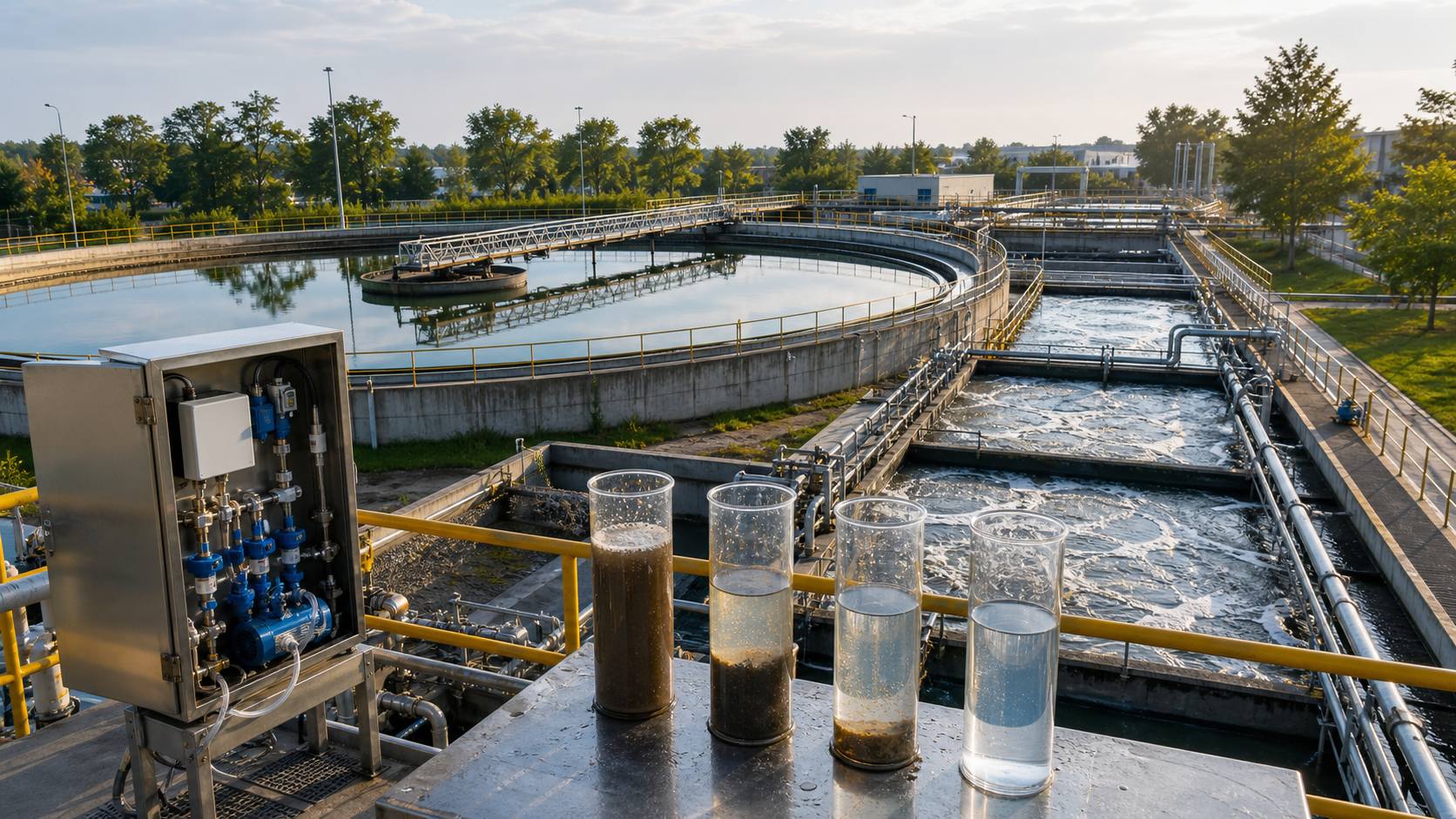
A belt press PAM tender should describe how conditioned sludge behaves through gravity drainage and compression, not just the final cake-solids target. A product may produce a reasonably dry sample while giving poor release, excessive filtrate solids or a narrow operating window. Put those practical requirements into the trial brief before suppliers arrive.
Define the belt press baseline
Record sludge source, feed solids, current throughput and the condition of belts and wash systems. Identify the normal operating settings used for comparison. A newly cleaned belt and a partly blinded belt do not provide equivalent test conditions. Resolve known maintenance faults before attributing the entire performance difference to a candidate polymer.
Use the belt press optimisation guide to organise the operating observations. In the tender, distinguish mandatory equipment constraints from variables that the trial team may adjust under an approved plan. This makes the evaluation reproducible across bidders.
Ask for a usable drainage range
Describe how gravity-zone drainage will be assessed and how filtrate quality will be measured. Record whether sludge spreads and retains floc through the actual distribution arrangement. Do not select only for the largest visible floc: the press requires drainage and solids retention through its own loading and stress conditions.
When requesting Xinqi Polymer candidates, include observations of cake release and belt cleaning as well as laboratory results. The cationic PAM product family contains options for conditioning trials, but the tender should not prescribe an untested charge simply because another plant uses it.
Include handling and cleanup consequences
Record sticking, carryback and the amount of operator intervention needed during a representative run. A brief favourable sample may conceal a gradual accumulation on the belt or other parts of the press. Allow enough observation to identify those effects within the site's approved trial arrangements.
Keep wash-water conditions consistent where practical and record deviations. If one product is tested with substantially different feed or cleaning conditions, qualify the comparison. An apparent saving should not be based on moving labour or water consumption outside the trial's measurement boundary.
Write the award decision around evidence
Require a report showing the grade identity, product basis, normal operating range and the agreed capture and handling results. Retain raw measurements and exceptions. If candidates are effectively tied within the quality of the available data, say so and compare supply, preparation and support requirements transparently.
The final purchase specification should preserve the conditions that made the winning result useful. Include change notification and the documents needed at delivery. A tender that asks only for minimum price and maximum cake dryness can miss the daily operating differences that determine whether the belt press remains reliable between supplier visits.