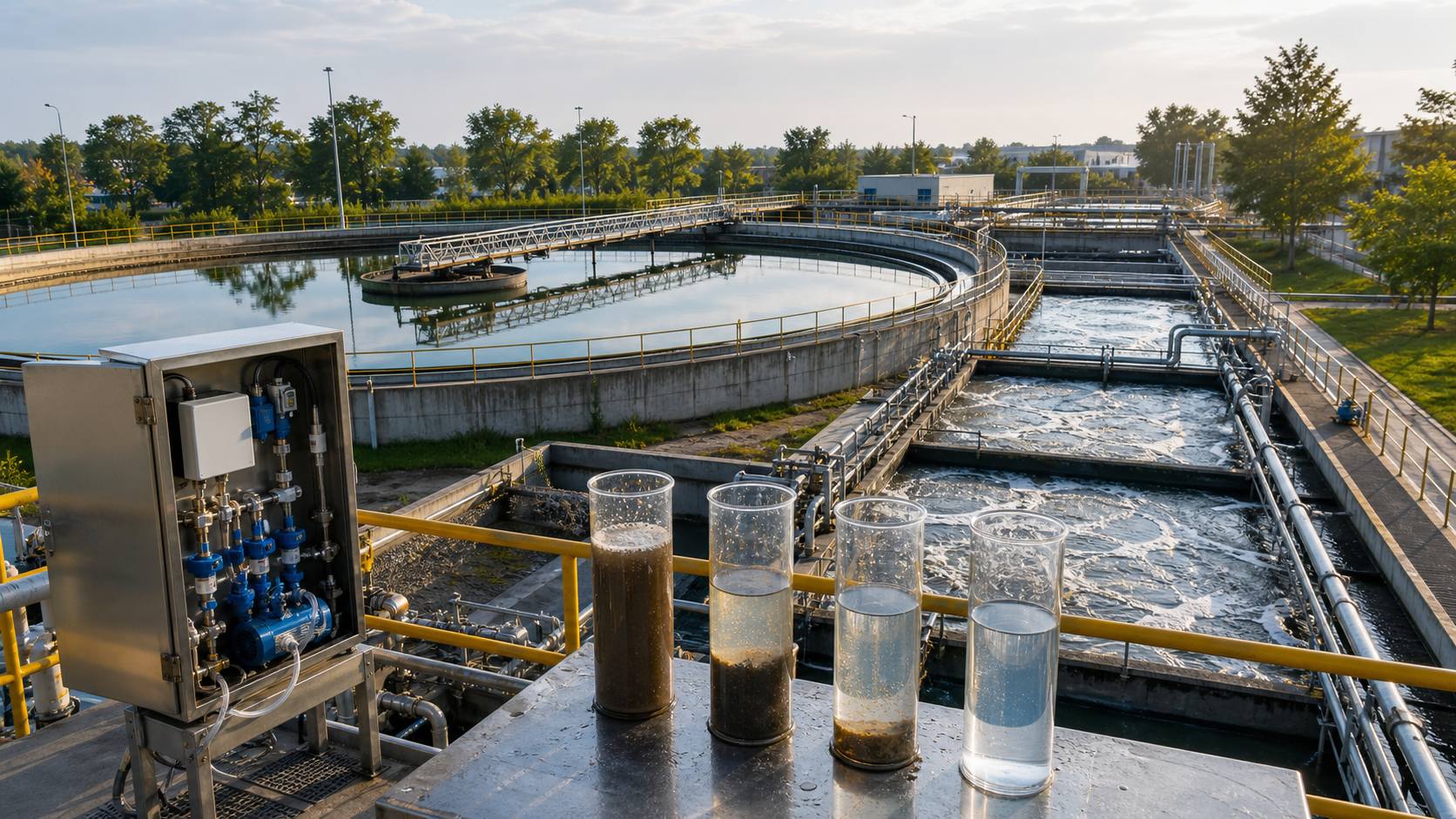
Polymer procurement for alum-bearing sewage sludge should account for the chemical solids entering the dewatering blend. A product qualified on biological sludge alone may not give the same operating window after a phosphorus-removal programme changes. Before requesting a replacement, establish whether the plant is processing different solids, more dry matter or an altered mixture of existing streams.
Trace the alum-treated solids
Identify where alum is added and where the resulting material is removed. Record whether it joins primary sludge, waste activated sludge or another stream before thickening or digestion. The relevant sample is the material entering the intended conditioning step, not necessarily water collected near the chemical dosing point.
Review the timing of process changes against sludge storage and transfer. A dewatering response can lag an upstream adjustment. The sludge-blend guide helps frame the sampling and comparison so a new product is not judged against an unrelated earlier blend.
Preserve the phosphorus-removal objective
Do not reduce upstream treatment solely to make a polymer trial appear easier. The plant's treatment requirements and approved operating controls remain in force. Have the responsible process staff define the range of sludge conditions that the candidate should accommodate.
Describe those conditions when asking Xinqi Polymer for samples. A cationic PAM resource can support selection discussions, but the presence of alum does not by itself establish the correct polymer grade. Product and dose screening still need representative sludge and a defined separation method.
Compare useful drainage and capture
Record how the conditioned sludge drains and how much fine material remains in the liquid. A larger floc is not sufficient evidence of a better purchase if the cake is difficult to release or the filtrate carries unacceptable solids. Match bench observations to the actual press or centrifuge confirmation.
Express chemical consumption on a consistent basis and retain dry-solids throughput. A higher daily polymer use can reflect higher sludge production rather than a worse dose per dry tonne. Separating those measures prevents a supplier from being blamed for a changed process mass balance.
Include blend variation in the order qualification
The approval record should name the tested blend and the range of upstream operation represented. If only one condition was tested, say so and identify what further verification is required. Avoid writing a broad guarantee for every alum dosage or sludge route based on a single sample.
Link the accepted candidate to production grade identity and the required batch documents. Where the plant expects the upstream programme to change seasonally, plan a review rather than silently extending the approval. The procurement objective is a usable conditioning range that supports phosphorus removal and solids handling together, not a local improvement obtained by weakening the treatment process it serves.